
Solomon's Greatest Proverb
When I was in high school, a fellow student once asked "What is the purpose of life?" I'm going to share the same verse with you that I shared with her.
But first, I need to tell you about a man named Solomon. Solomon was king over the nation of Israel about 3000 years ago. His reign was one of peace and prosperity. His father, King David, had subdued all the enemies round about Israel. When Solomon was king, God asked him in 1 Kings 3:5, "What shall I give you?" Instead of riches or long life, Solomon asked for wisdom. Pleased with his request, God said in 1 Kings 3:12:
"I have given you a wise and understanding heart, so that there has not been anyone like you before you, nor shall any like you arise after you"
Solomon's wisdom became legendary. Because of his wise judgments, the people of Isreal "saw that the wisdom of God was in him to administer justice" (1 Kings 3:28). Even the queen of Sheba traveled to Jerusalem to "test him with hard questions," but finally she had to concede, "Your wisdom and prosperity exceed the fame of which I heard" (1 Kings 10:1-13).
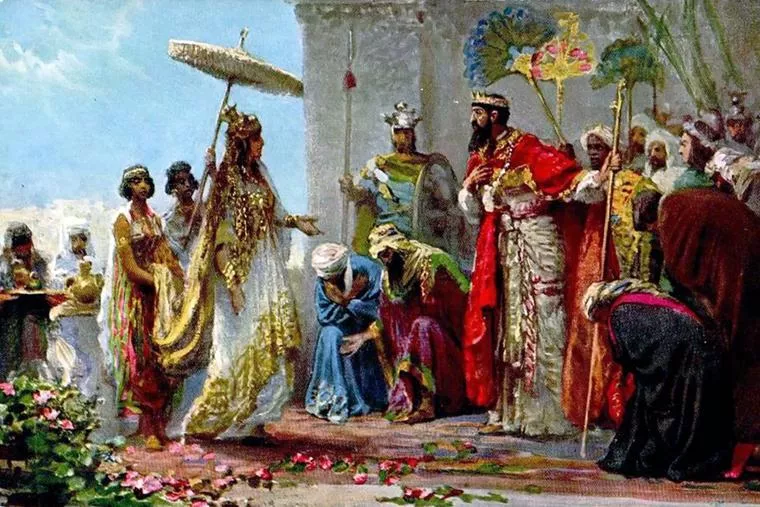
Yet even with all that wisdom, that did not guarantee that Solomon would choose a righteous path. The scripture tells us in 1 Kings 11:4, "When Solomon was old, that his wives turned his heart after other gods; and his heart was not loyal to the LORD his God, as was the heart of his father David." The first and second chapters of Ecclesiastes tells us that Solomon pursued pleasure and riches. In Ecclesiastes 2:9-10 he says,
"So I became great and excelled more than all who were before me in Jerusalem. Also my wisdom remained with me.
Whatever my eyes desired I did not keep from them. I did not withhold my heart from any pleasure."At one point, Solomon asks "Who can have enjoyment, more than I?" and at another, "What more can the king's successor do, than what has already been done?" (Ecclesiastes 2:12,25). As king of a great and prosperous nation, and with wisdom divinely given, what can a man hope to learn or discover that Solomon didn't already do or ponder? In fact, he begins Ecclesiastes with just this point, writing in Ecclesiastes 1:9-10:
That which has been is what will be, That which is done is what will be done, And there is nothing new under the sun. Is there anything of which it may be said, "See, this is new"? It has already been in ancient times before us."
So then, what did this great king discover? Having withheld nothing from himself and achieved such greatness with his fabled wisdom, surely he can tell what is good in life, what we should pursue. Here is what he had to say in Ecclesiastes 1:14 (and this becomes a repeated theme throughout the book):
"I have seen all the works that are done under the sun; and indeed, all is vanity and grasping for the wind."
In the end, all his riches, all his fame, all his pleasure-seeking, were nothing more than emptiness.

But that was not the verse I shared with my fellow student in high school. The entire book of Ecclesiastes is devoted to the insight Solomon gained while he set his "heart to seek and search out by wisdom concerning all that is done under heaven" (Ecclesiastes 1:13). It is an important book to read, a probably my favorite in all the Bible. And though his methods were not always righteous, he did save us the trouble of wasting our lives in the same pursuits. In the end, having learned a great deal, he shares with us the true answer to the purpose of life in Ecclesiastes 12:13-14:
"Let us hear the conclusion of the whole matter: Fear God, and keep his commandments: for this is the whole duty of man. For God shall bring every work into judgment, with every secret thing, whether it be good, or whether it be evil"
Solomon's greatest proverb, his greatest insight, was to show us that this life is waste, meaningless, vain--unless it is lived in service to God, who will judge all of our works in the end
 More Bible Study Articles