
7 Scriptures To Kickstart Your Bible Study
These verses with help get you started on your journey to study the bible.
There are lots of good ways to study the bible. You can pick out a particular book in it to read from start to finish. (My favorite is Ecclesiastes). Or you can look up all the scriptures on a certain topic. (Nave's Topical Bible is a good resource for this.) You could use a concordance and Greek lexicon. Or you could just sit down at the dinning room table and open randomly to a passage. You could study alone, with your family, with a small group of friends, or in a formal bible study with a congregation of believers. I daresay all of these activities would be fruitful in one way or another.

However, in this article, I'd like to share with you my personal way of beginning a bible study. There are ten verses that I think it is important to understand before you tackle most bible subjects. Why? Because these verses deal with how you should look at the bible. Whether your bible study succeeds and bears fruit willl largely depend upon your own attitude.
So let's begin...
"O Lord, I know the way of man is not in himself. It is not in man who walks to direct his own steps."
Jeremiah 10:23
The Old Testament prophet Jeremiah uttered these words, and each person who wishes to seek God needs to understand and embrace them. He is saying, "God, I don't know what I am doing, and I need you to guide me." Perhaps one of the reasons so few people in our modern society study the bible and seek God's wisdom is because this principle is opposite to what we believe as Americans. We pride ourselves on our independence, on self-reliance, on making our own way and our own choices. But those ideas, especially when it comes to religion, are flawed.

The bible teaches that left to our own devices, men with make poor, wrong, and dangerous decisions. The book of Proverbs 16:25, which is a collection of biblical wisdom, has this to say about our decision-making ability:
"There is a way that seems right to a man, But its end is the way of death"
Just think back on your own experience. How many times have you been headstrong about having things your way, and then done something stupid? I know my experience has been that I used to think I knew what I was doing (when I was young and foolish), but now (after many mistakes) I know better. Not that "I know better" so that I can make all the right decisions now, but now I know how little I am capable of doing things without God's guidance. And I've learned my ultimate destination if I choose my own path without God's help: spiritual death, suffering, shame, and hell.Consider a similar proverb to the one quoted above from Proverbs 21:2:
"Every way of a man is right in his own eyes, But the LORD weighs the hearts"
When I choose my own path, of course it looks good to me--that's why I chose it. Plus, like most people, I have the psychological need to be right and never admit I'm worng. But no matter how good my decisions appear to be, I am not the judge of these things. In the end, I must face God, my Creator, and he will judge my life."Can anyone teach God knowledge?"
Job 21:22
So if I am not capable of making my own decisions, where do I turn? How about to the wisest, most knowledgable, most intelligent being around: God, the Creator of the Universe, the Almighty, the Eternal. In Proverbs 3:5-6, it says:
"Trust in the LORD with all your heart, And lean not on your own understanding. In all your ways acknowledge Him, And He shall direct your paths."
Is there any other person or place to go for answers? Can you make a better choice than God can? Of course not. No mere mortal can "teach God knowledge," so instead we should be quiet and listen to what He has to say.
These scriptures are the basis for why we study: Because we realize our own inadequacy for the difficult task of living life rightly, in a way that will preserve our souls and make our lives and the lives of those around us good. And we recognize that God is the one with all the answers, and so we turn to the Bible, the inspired book he gave us to guide our lives.
"All Scripture is given by inspiration of God, and is profitable for doctrine, for reproof, for correction, for instruction in righteousness, that the man of God may be complete, thoroughly equipped for every good work."
2 Timothy 3:16-17
Timothy was a young preacher who had worked closely with the Apostle Paul. The apostle gives Timothy many instructions about how to be a good christian and a good preacher. In this particular verse, the apostle makes three very important points:
First, that the scriptures--all of them--are inspired by God. The word "inspired" means that these words came from God, not men. This is a very important point to remember as you study. Always keep in mind that the commands, instructions, and ideas contained in the bible are the words of God, not of men, and therefore should be treated as such.

Secondly, the apostle points out that the scriptures are valuable. They are useful for all the jobs listed: "for doctrine, for reproof, for correction, for instruction in righteousness." A discussion of these things could easily be a whole separate article, so lets just look at the last one: "instruction in righteousness." Most of the time when we sit down and study, this is what we are trying to do--to educate ourselves on how to be righteous or acceptable to God.
Finally, the apostle points out to Timothy that the scriptures are designed to make each christian complete. Certainly, when we begin to live our lives in service to God, we have many flaws and many things lacking, but the purpose of the scriptures is to help us improve, learn, and (note the last part of the verse) to do good works.
"...knowing this first, that no prophecy of Scripture is of any private interpretation, for prophecy never came by the will of man, but holy men of God spoke as they were moved by the Holy Spirit."
1 Peter 1:20-21
This scripture is written by the apostle Peter, who is relating in these verses how the word of God was handed down to us. It sheds further light on what Paul means above by "inspired." Peter uses the word prophecy here which means "a discourse emanating from divine inspiration and declaring the purposes of God" (Thayer's Greek Lexicon). Sometimes in English we think of prophecy only meaning to predict the future, but in Greek it was a broader term that meant to speak the words of God by inspiration. Peter tells us that these prophecies, these scriptures, came from God via the Holy Spirit, who "moved" inspired men (like Peter and Paul) to speak these things. (And the Holy Spirit verified that they were inspired by performing miracles through them.)
Since the scriptures came from God and are not the words of men, note that the apostle says they are not subject to "private interpretation." This is a huge problem in the religious world today. I could probably get ten people from TEN different denominational churches, read them ONE single scripture, and get from them TEN different interpretations of what the verse said. This ought not to be so. When God says something in his scriptures, He also means something. Some specific thing--not ten different things depending on who you ask.

If we are going to study the bible, we have to be willing to set aside our own thoughts, ideas, and interpretations, and instead hear what God has to say. Through diligent study we can understand his will for us, but we need to keep our own prejudices out of the way. To illustrate this point about bible study my father used to say, "If I study a verse with someone and we disagree, there are three possible things going on. Either I'm right, and he is wrong. Or he is right, and I am wrong. Or, more likely, we are both wrong. But one thing is for certain, God is always right."
"...if indeed you have heard of the dispensation of the grace of God which was given to me for you, how that by revelation He made known to me the mystery (as I have briefly written already, by which, when you read, you may understand my knowledge in the mystery of Christ), which in other ages was not made known to the sons of men, as it has now been revealed by the Spirit to His holy apostles and prophets."
Ephesians 3:2-5
The Apostle Paul wrote these words to the church at Ephesus. As we already noted in earlier verses, the apostles were inspired by the Holy Spirit to speak the words of God. Before He was crucified, Jesus told the apostles in John 14:26:
"...the Helper, the Holy Spirit, whom the Father will send in My name, He will teach you all things, and bring to your remembrance all things that I said to you".
There was no one who understood the gospel more clearly than these men, who were taught by Jesus directly and then inspired by the Holy Spirit after Jesus ascended into heaven.
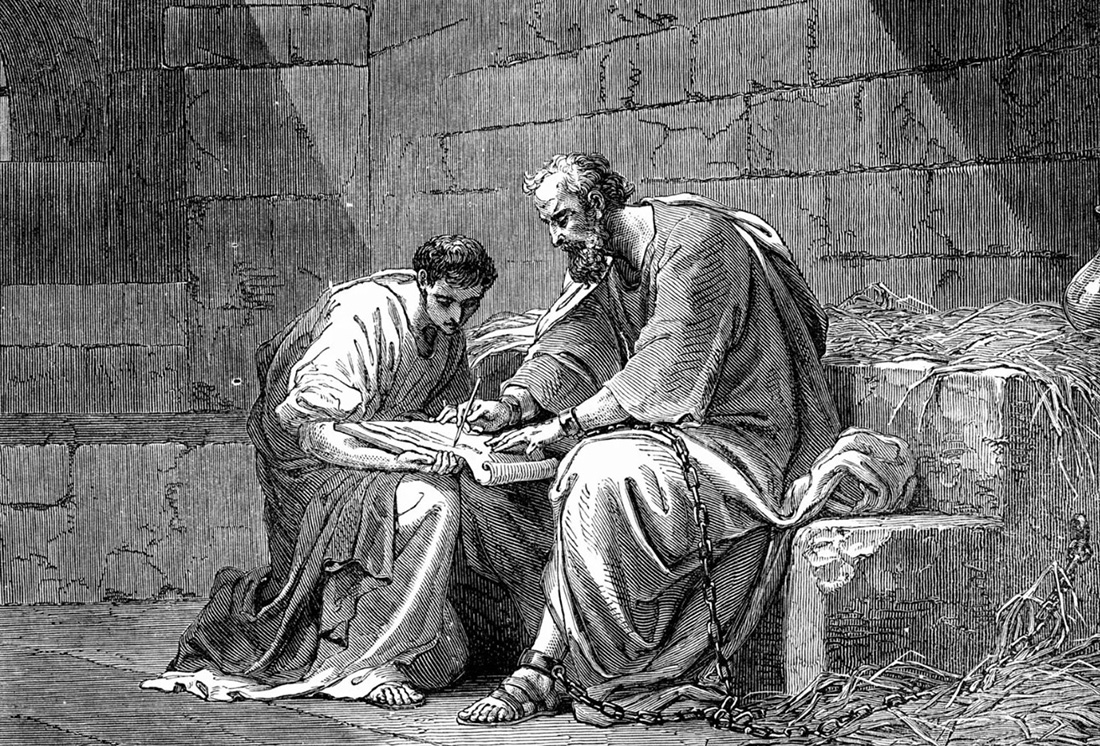
Now, notice what Paul said to the reader of the Ephesian letter, "...when you read, you may understand my knowledge in the mystery of Christ..." Paul told the Ephesians that he was writing in a such a way that they could understand these things as well as Paul did. Some misguided people teach that the Bible is too hard for the ordinary person to understand. That it is too cryptic, its meanings hidden and obscured, and there is no hope of understanding it alone. Then they explain how you need a specially trained priest or preacher or a special creed book to understand the Bible. But Paul teaches otherwise. He says that "when you read, you may understand."
Now, that's not to say that some verses won't be a difficult study, or that you are not going to have to be diligent and dig deep. For instance, remember that the New Testament was written in Greek and we are reading it translated into our own language. We might have to go back to the original texts sometimes to get a full understanding (or perhaps improve out knowledge of history or ancient cultures), but the point of this particular scripture is that we can understand the bible, because that was the intention of the inspired writers when they wrote it.
"For though by this time you ought to be teachers, you need someone to teach you again the first principles of the oracles of God, and you have come to need milk and not solid food. For everyone who partakes only of milk is unskilled in the word of righteousness, for he is a babe. But solid food belongs to those who are of full age, that is, those who by reason of use have their senses exercised to discern both good and evil."
Hebrews 5:12-14
Along the same lines, we do need to realize that not all of the scriptures are a piece of cake. Speaking about Paul's writings, the Apsotle Peter says in 2 Peter 3:15-17:
...our beloved brother Paul, according to the wisdom given to him, has written to you, as also in all his epistles, speaking in them of these things, in which are some things hard to understand, which untaught and unstable people twist to their own destruction, as they do also the rest of the Scriptures."
Peter indicates that there are hard things to understand in the Bible, and even points out that some people will twist those things. But "hard to understand" is not the same as "impossible to understand."
The scripture above from the book of Hebrews points out that one of the things that affects out understanding of the bible is our own maturity (or lack thereof). The writer of Hebrews was telling his audience that he had some difficult things abut Jesus to explain to them, but they were not ready to hear them. Paul says a similar thing in 1 Corninthinans 3:1-3:
And I, brethren, could not speak to you as to spiritual people but as to carnal, as to babes in Christ. I fed you with milk and not with solid food; for until now you were not able to receive it, and even now you are still not able; for you are still carnal. For where there are envy, strife, and divisions among you, are you not carnal and behaving like mere men?
They were still babes and had not matured as they should have. Being a babe is not a bad thing in and of itself. All Christians start that way. But staying in that state is not good. Peter also says in 1 Peter 2:2:
"...desire the pure milk of the word, that you may grow thereby"
Isn't that one of the reasons we study? Our purpose is too grow, that we might understand the even more difficult things found in the meat of the word so that we may "discern both good and evil".
"Ask, and it will be given to you. Seek, and you will find. Knock, and it will be opened to you. For everyone who asks receives, and he who seeks finds, and to him who knocks it will be opened."
Matthew 7:7-8
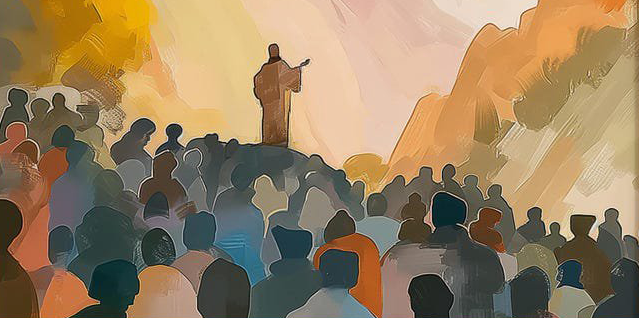
Let's conclude with this encouraging verse from Jesus Himself, from the Sermon on the Mount. Jesus assures us that if we come to him, he and the Father, and the Holy Spirit are there. If we need guidance, wisdom, help, comfort--God is there waiting and wanting to give those gifts to us.
God spent centuries expressing His will and sharing His wisdom through scripture and then protecting it down through the ages so that you have the Bible in your hands. If you use that gift, read it, study it, meditate on it, then you are on the right track. If you approach the scripture with a humble heart, ready to learn, the time you devote will not be in vain. It will improve your life and open the door to many spiritual blessings.
 More Bible Study Articles